Module 1: Understanding Relationships
Love Is More Than a Feeling
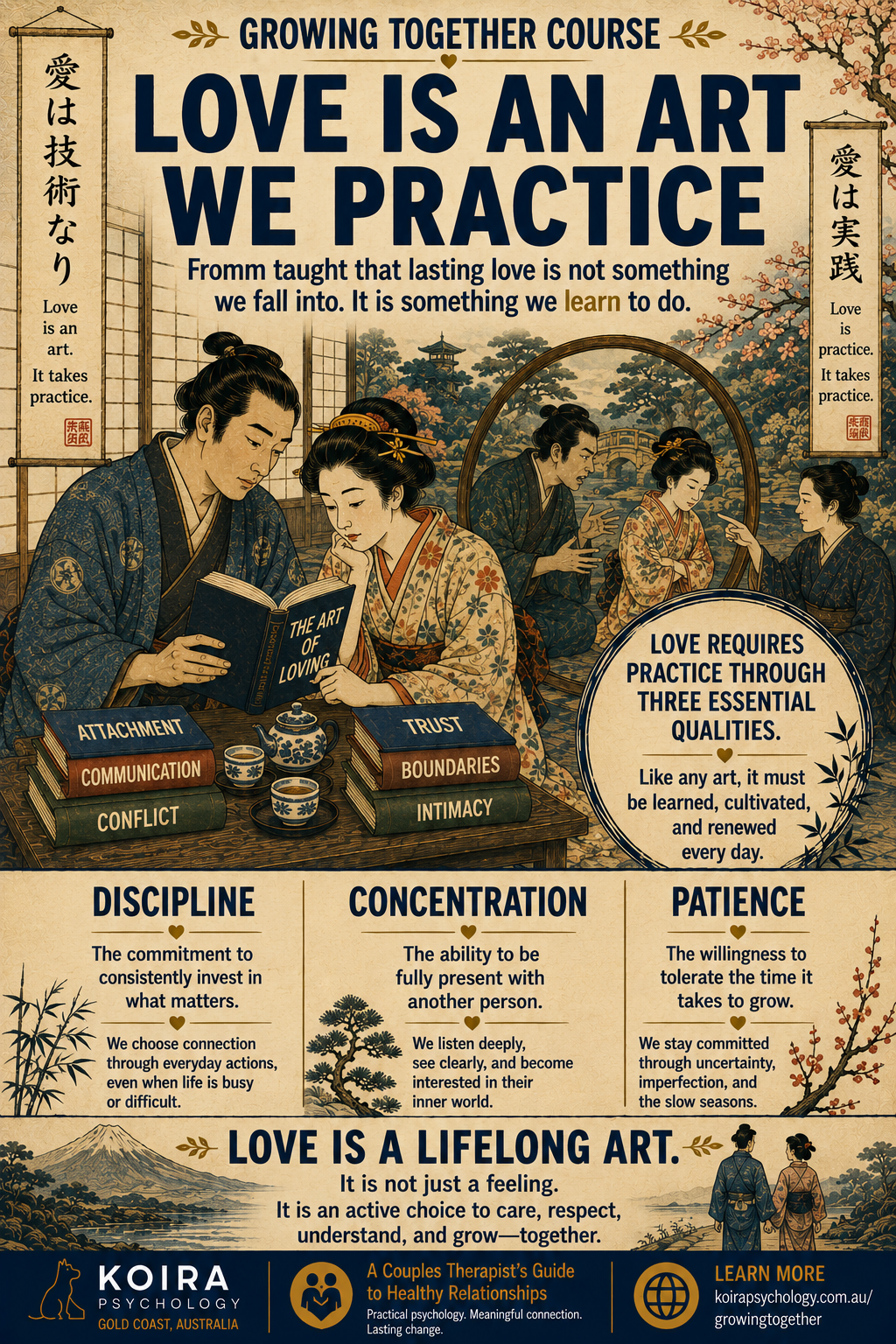
As a relationship psychologist, I often meet couples who genuinely love one another yet struggle to maintain closeness, understanding, and connection. Many arrive hoping to discover the secret that will make love easier. They want better communication techniques, more compatibility, or fewer conflicts. While these things can help, the social psychologist and philosopher Erich Fromm offered a different perspective. In his influential The Art of Loving, Fromm argued that love is not primarily a feeling that happens to us—it is a practice that we develop.
This idea can be surprising in a culture that often portrays love as something we "fall into." We are encouraged to search for the right person, believing that lasting love will naturally follow once we find them. Fromm suggested that this view misses something essential. The challenge is not simply finding someone to love; it is developing the capacity to love well.
Why Fromm Called Love a Practice
According to Fromm, all arts require practice. Whether learning music, medicine, or carpentry, mastery demands commitment and effort. Love is no different. It requires the development of certain qualities and habits over time. Among the most important are discipline, concentration, and patience.
Many people approach relationships as though love should come naturally if the match is right. When difficulties arise, they may assume that something is wrong with the relationship itself. Fromm challenged this assumption. Just as a musician must practice scales or an athlete must train consistently, loving well requires ongoing effort and development.
From this perspective, successful relationships are not built solely on chemistry or compatibility. They are built on the willingness of both partners to practice the skills that sustain connection.
The Role of Discipline in Love
Discipline is perhaps the most misunderstood requirement of love. Many people associate discipline with restriction or self-denial. Fromm saw it differently. Discipline is the ability to consistently invest in something that matters.
In relationships, this means making time for meaningful conversations, attending to a partner's needs, and remaining engaged even when life becomes busy or stressful. It means choosing connection when distractions are readily available. Love cannot thrive solely on good intentions. It requires regular practice through everyday actions.
Many couples tell me they want a deeper relationship, yet struggle to create the time and space necessary for intimacy. Discipline helps transform love from an occasional feeling into a daily commitment.
The Importance of Concentration
To truly love another person, we must be present with them. Yet modern life makes this increasingly difficult. Our attention is fragmented by smartphones, social media, work demands, streaming services, and constant notifications.
Many couples spend hours in the same room while barely engaging with one another. They may be physically present and emotionally elsewhere. Fromm believed that genuine love requires focused attention—the ability to listen deeply, observe carefully, and become interested in another person's inner world.
As a therapist, I often find that relationship problems are not simply caused by poor communication. They are caused by insufficient attention. People feel disconnected because they do not feel seen, heard, or understood. Concentration allows us to move beyond surface-level interactions and reconnect with the person in front of us.
Why Patience Matters
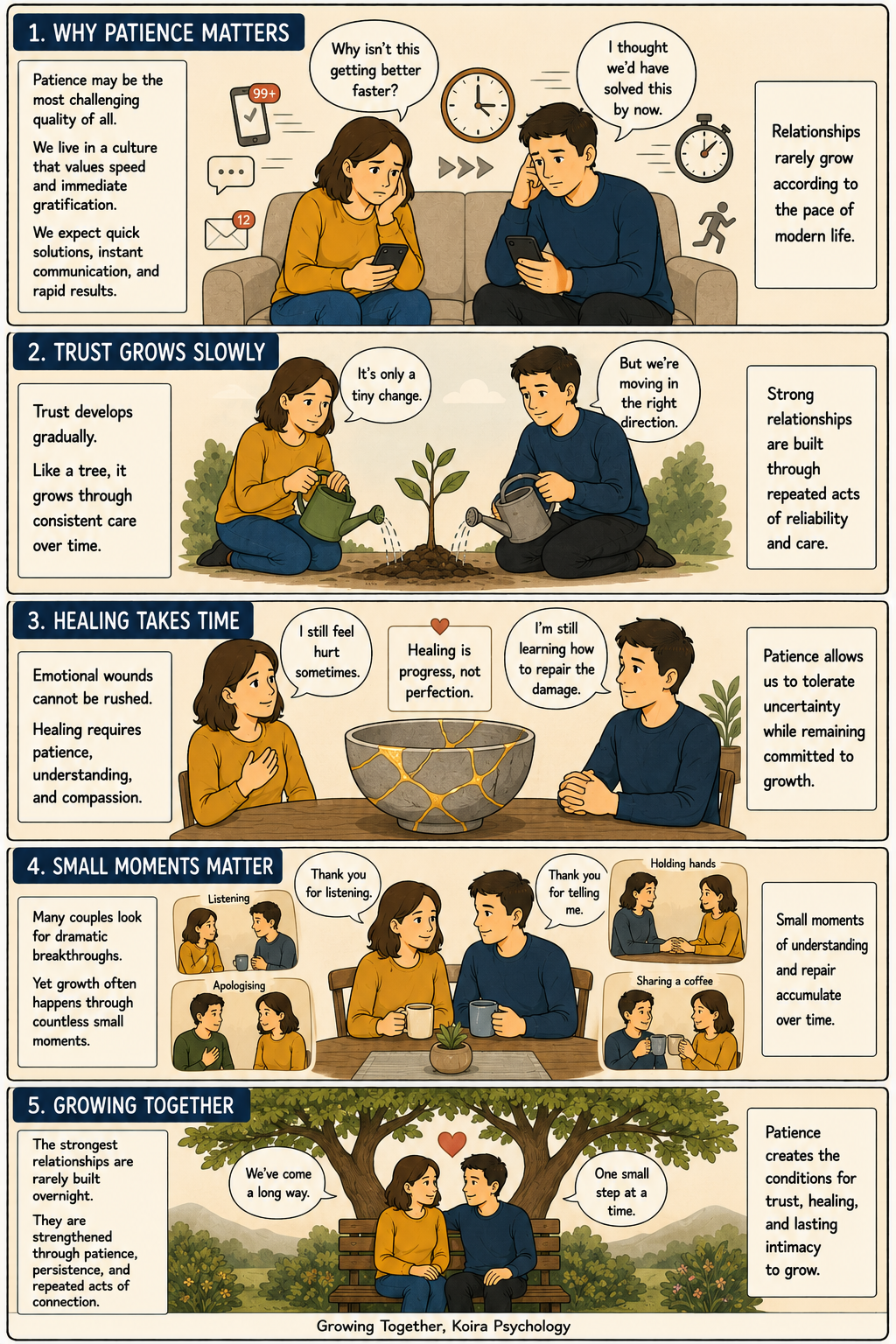
Patience may be the most challenging quality of all. We live in a culture that values speed and immediate gratification. We expect quick solutions, instant communication, and rapid results.
Relationships, however, do not grow according to these timelines. Trust develops slowly. Emotional wounds take time to heal. Understanding another person is a lifelong process. Patience allows us to tolerate uncertainty, frustration, and imperfection while remaining committed to growth.
Many couples become discouraged when progress feels slow. Yet the strongest relationships are rarely built through dramatic breakthroughs. More often, they are strengthened through countless small moments of understanding, repair, and connection over time.
Why These Qualities Are So Difficult Today
Discipline, concentration, and patience run counter to many cultural messages. We are often encouraged to seek efficiency rather than depth, stimulation rather than reflection, and personal gratification rather than mutual development.
Technology offers constant distraction. Consumer culture encourages us to believe that satisfaction should be immediate. Social media often presents unrealistic images of relationships that appear effortless and conflict-free.
As a result, many people unknowingly bring habits of distraction, impatience, and avoidance into their relationships. These habits can undermine intimacy even when genuine love is present.
Love as a Lifelong Art
Fromm believed that love is ultimately an active orientation toward life rather than merely an emotion directed at one person. Loving well involves cultivating qualities such as responsibility, respect, care, and knowledge. These qualities strengthen not only romantic relationships but also friendships, family relationships, and our connection to the wider community.
In couples therapy, I often see the wisdom of Fromm's ideas. Strong relationships are rarely the result of perfect compatibility. More often, they are built by two imperfect people who repeatedly choose to practice love. They learn to listen when it would be easier to withdraw. They remain curious when they feel misunderstood. They continue investing in the relationship even when the rewards are not immediate.
Fromm's message remains profoundly relevant today. Love is not something we passively receive. It is a skill, an art, and a lifelong practice. The more we cultivate discipline, concentration, and patience, the more capable we become of creating the kind of relationships that many people seek but few are taught how to build.
Key Points
Love is a skill that must be practiced, not just a feeling to be experienced.
Lasting love depends less on finding the right person and more on developing the capacity to love well.Strong relationships require discipline.
Love grows through consistently investing time, attention, and effort into the relationship, especially when life is busy or stressful.Connection depends on concentration and presence.
People feel loved when they feel seen, heard, and understood. Genuine intimacy requires focused attention rather than distracted coexistence.Patience is essential for relationship growth.
Trust, understanding, healing, and emotional closeness develop gradually and cannot be rushed.Modern culture often works against the qualities that sustain love.
Distraction, instant gratification, and unrealistic expectations can undermine intimacy unless couples consciously cultivate deeper habits of connection.

Self-Reflection Questions
How consistently do we make time and space to nurture our relationship, even when life becomes busy?
When we are together, do we give each other our full attention or are we often distracted by other demands?
How patient am I when growth, change, or healing in our relationship takes longer than I would like?
What daily habits help us practice love, rather than simply rely on loving feelings?
-
The Art of Loving by Erich Fromm is available as a e-book at Gold Coast Library