Module 1: Understanding Relationships
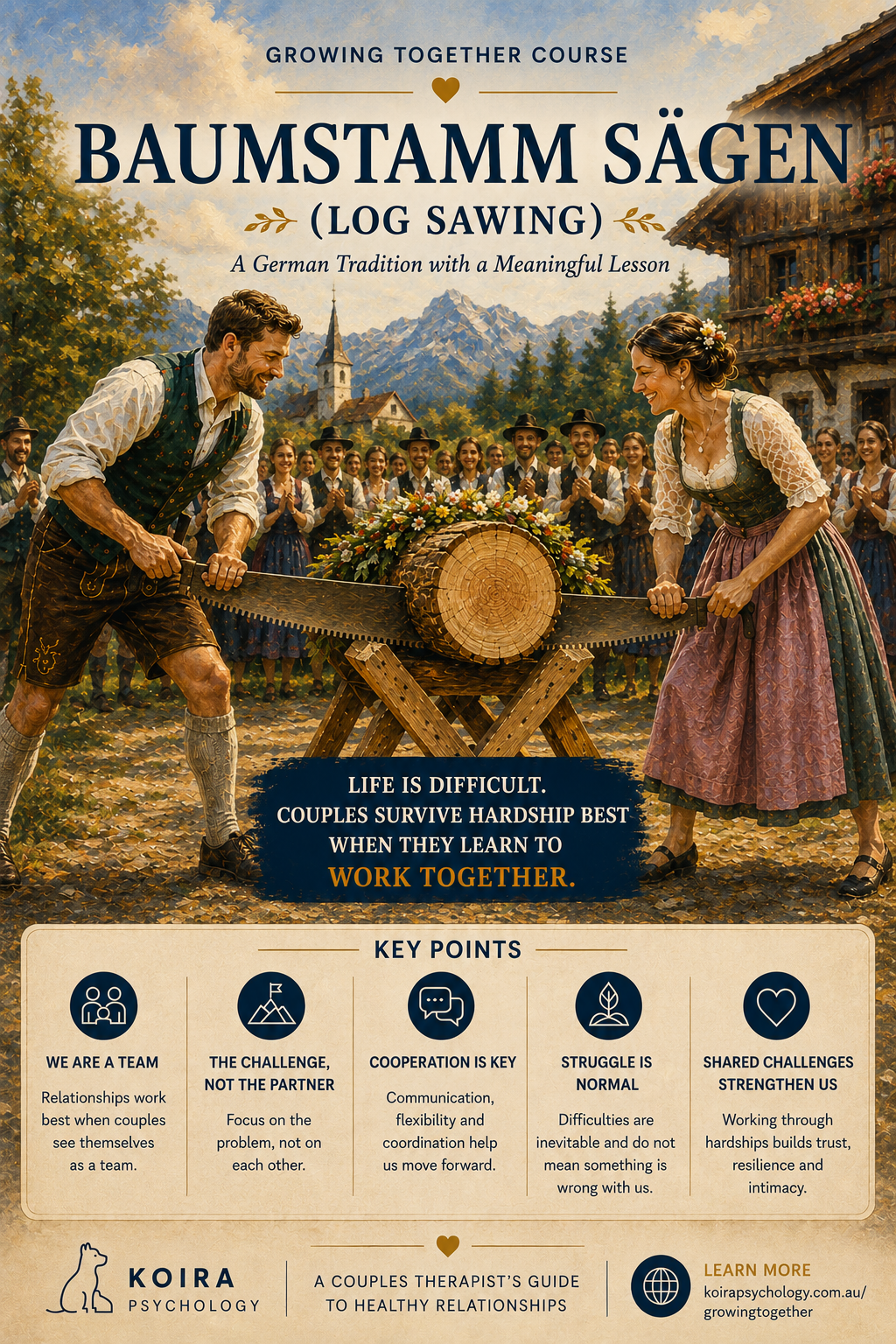
A German Tradition with a Meaningful Lesson
In some traditional German wedding celebrations, there is a custom known as Baumstamm sägen (log sawing), where a newly married couple work together to saw through a large log using a long two-person saw. At first glance, it may appear to be a playful or symbolic tradition, but from a Couples Therapy perspective, it reflects something important about relationships that past generations seemed to understand well: life is difficult, and couples survive hardship best when they learn to work together.
The task itself is impossible to complete effectively alone. One person cannot force the saw through the wood by overpowering the other. If either partner pulls too aggressively, moves out of rhythm, or works against the other person, the saw becomes stuck. Progress only happens when both people cooperate, communicate, adjust to one another’s timing, and find a shared rhythm.
Relationships Are Often Like the Saw
Relationships often work in much the same way.
Many couples enter relationships hoping love alone will remove conflict or struggle. Yet over time, every relationship encounters stress, disappointment, misunderstandings, competing needs, external pressures, and emotional pain. Couples therapy often involves helping partners shift away from seeing each other as the problem and toward recognising that they are facing life’s difficulties together.
The symbolism behind log sawing captures this beautifully. The challenge is not the partner standing opposite you, but the log itself. When couples begin fighting each other rather than working alongside each other, they often become emotionally stuck, as will the log become stuck. One partner may push harder while the other withdraws or one may criticise while the other becomes defensive. Eventually, both people can lose sight of the fact that they are meant to be on the same side, working together, finding solutions.
The Wisdom of Cooperation
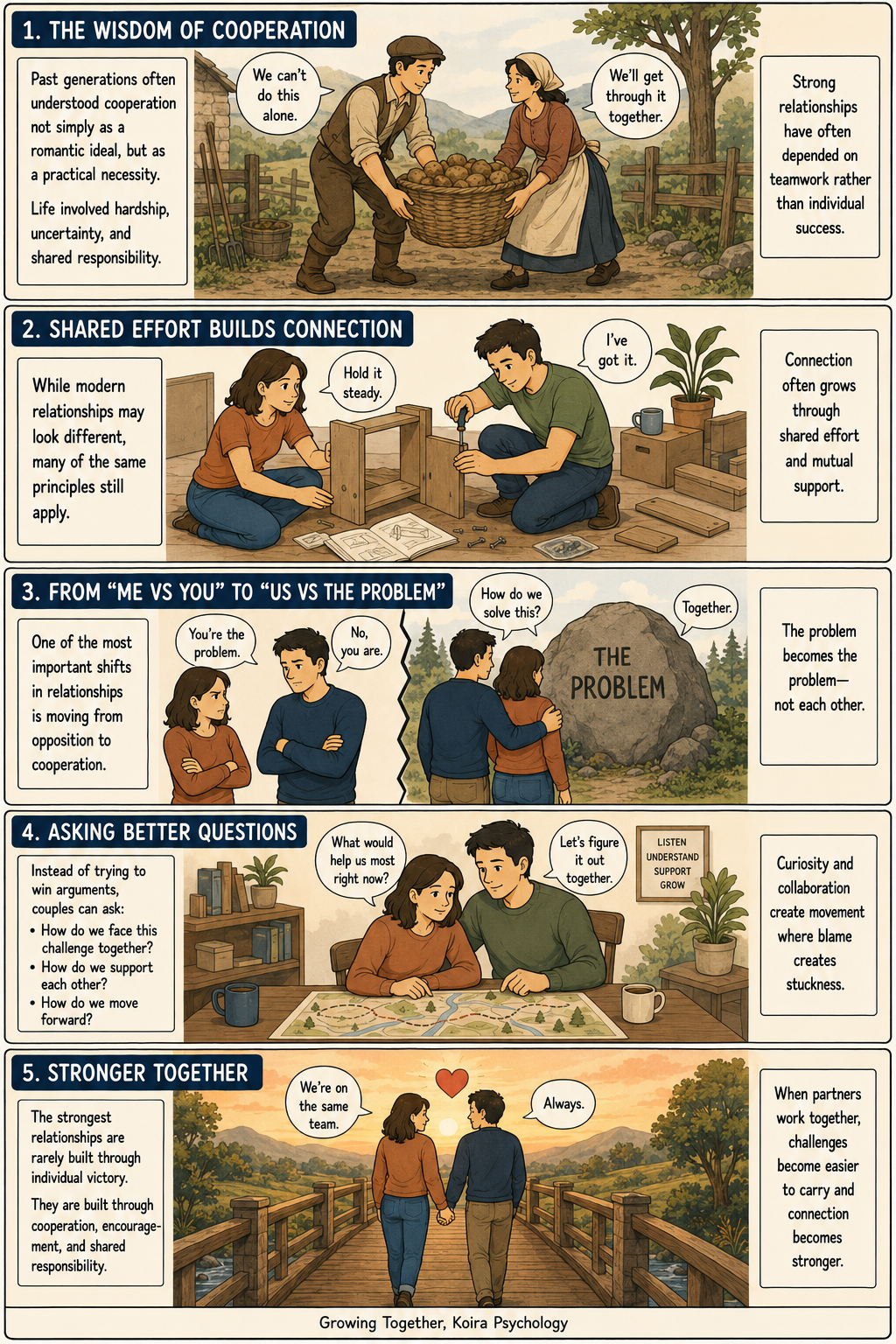
Past generations often understood cooperation not simply as a romantic ideal, but as a practical necessity. In the past, life historically involved significant hardship: raising children, surviving financial pressures, physical labour, illness, loss, and uncertainty. Couples depended on teamwork to navigate these realities. While modern relationships may look different externally, emotionally many of the same principles still apply. Strong relationships are rarely built through individual victory, but through shared effort and mutual support.
In relationships, one of the most important shifts occurs when partners begin moving from “me versus you” toward “us versus the problem.” Instead of trying to win arguments, prove fault, or force change through criticism, couples can begin asking:
● How do we face this challenge together?
● How do we support each other while still acknowledging hurt and frustration?
● How do we communicate in ways that help us move forward rather than become more stuck?
Finding a Shared Rhythm
Like the saw moving through the log, relationships require flexibility and rhythm. Sometimes one partner pulls while the other yields. At other times the roles reverse. Healthy cooperation is not rigid equality in every moment, but responsiveness to each other’s needs, strengths, and limitations.
The tradition also quietly acknowledges that struggle itself is normal. The log is meant to be difficult to cut. No one expects it to happen instantly or effortlessly. In many relationships, couples become discouraged because they interpret difficulty as evidence that something is wrong with the relationship itself. Yet challenges are not necessarily signs of failure. Often, they are opportunities for couples to learn patience, resilience, communication, and teamwork.
Growing Closer Through Shared Challenges
There is also something profoundly connecting about shared effort. Couples who overcome challenges together often develop deeper trust and intimacy because they experience themselves as capable of surviving hardship side by side. Emotional closeness is not only built through comfort and romance, but through facing difficulties together with care, persistence, and cooperation.
From a therapeutic perspective, Baumstamm Sägen reminds us that healthy relationships are not about eliminating struggle or perfectly avoiding conflict. They are about learning how to stay connected while working through life’s inevitable challenges together. Much like the couple sawing through the log, progress often comes not from force or control, but from patience, coordination, and remembering that the person beside you is meant to be your partner, not your opponent.

Key Points
Relationships work best when couples see themselves as a team.
Like the couple sawing the log, partners make the most progress when they work together rather than against one another.The real challenge is often the problem, not the partner.
Couples can become stuck when they start viewing each other as the enemy instead of focusing on the issue they are facing together.Cooperation requires communication, flexibility, and coordination.
Healthy relationships depend on partners adjusting to each other's needs, timing, strengths, and limitations.Struggle is a normal part of relationships.
Difficulties, disagreements, and external pressures are inevitable and do not necessarily mean something is wrong with the relationship.Shared challenges can strengthen connection.
Working through hardships together can build trust, resilience, intimacy, and confidence in the relationship's ability to endure difficult times.
Self-Reflection Questions
When challenges arise, do we tend to see each other as opponents or as partners facing the problem together?
What patterns cause us to become "stuck" during conflict (e.g., criticism, defensiveness, withdrawal, or trying to win)?
How well do we adjust to each other's needs, strengths, and limitations when life becomes stressful?
Can you think of a challenge you have overcome together, and what did it teach you about your relationship?
-
Add a short summary or a list of helpful resources here.