Module 2: Creating Safety and Connection
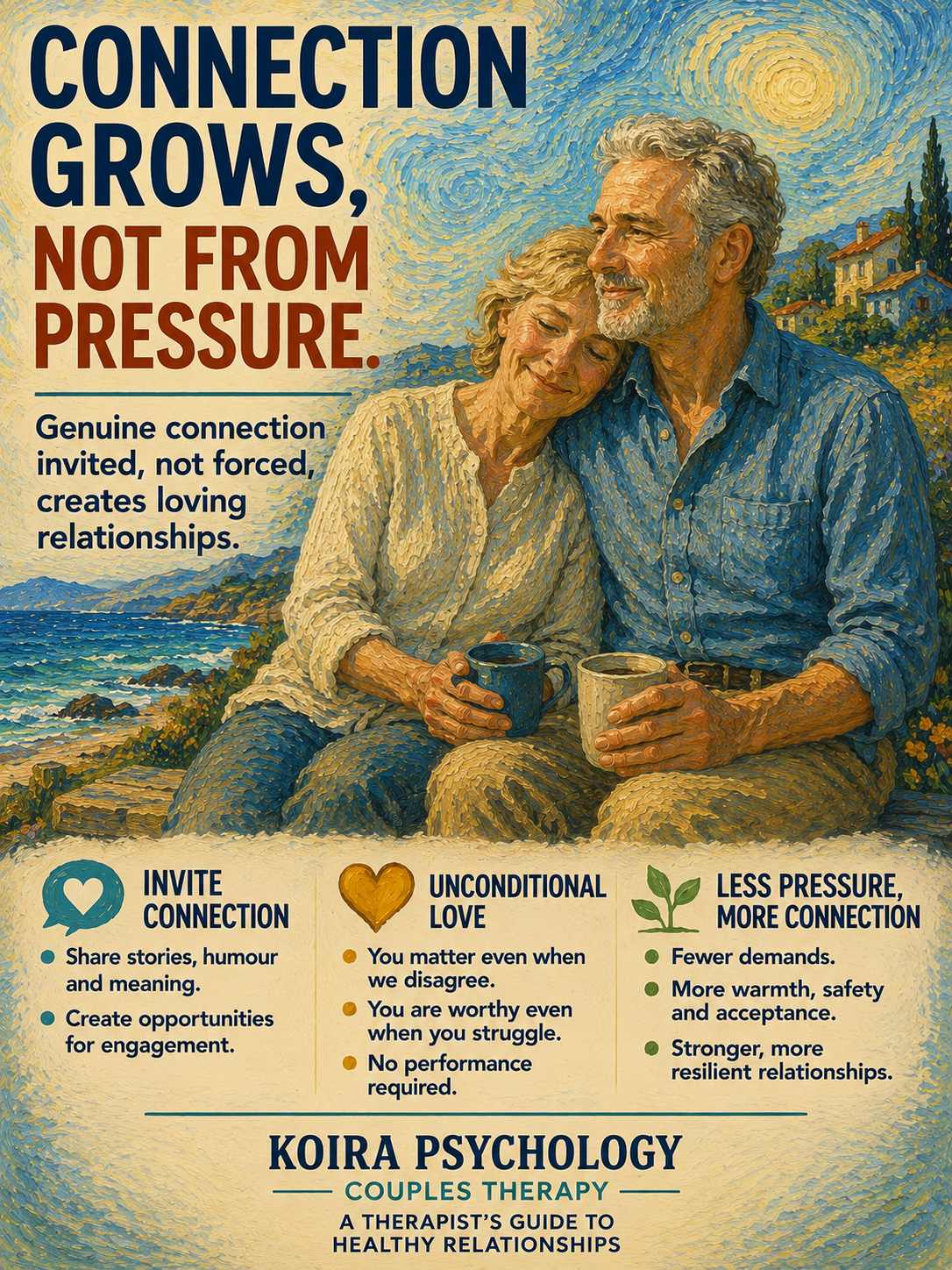
When people feel disconnected, they often attempt to force connection through criticism, pressure, consequences, or demands.
Unfortunately, genuine connection rarely grows from coercion.
In families and couples, I often see a different approach produces better results.
Rather than focusing on stopping unwanted behaviours, one focuses on creating an environment that naturally invites engagement.
● A parent might tell an entertaining story during dinner.
● A partner might share something humorous or meaningful about their day.
Rather than demanding participation, they create opportunities for connection. Fully engage themselves with others and invite them to collaborate with brainstorming and problem-solving. As people feel more connected, safer, accepted, and less judged, they often begin to engage voluntarily.
A smile is exchanged.
Eye contact returns.
A laugh is shared.
The relationship becomes less about managing behaviour and more about nurturing connection-unconditional lovingness is felt and experienced.
What Gets in the Way of Unconditional Love?
Most people genuinely want to be loving. However, several common habits can interfere with unconditional connection.
These include:
● Pressuring others toward a desired response or outcome.
● Becoming visibly annoyed when needs are not met immediately or to your expectation
● Transferring frustration, disappointment, or resentment onto others.
● Using a demanding tone to gain agreement.
● Neglecting your own wellbeing while focusing excessively on others.
● Giving disproportionate attention to one family member at the expense of the broader family system.
These patterns are understandable. They often emerge from anxiety, fear, or a desire to help. However, they can unintentionally create power imbalances and emotional distance.
Healthy relationships require balance.
We can care deeply about others without carrying responsibility for their emotions, choices, or self care. In other words, we focus on connecting with others even when they don’t feel the way we do, make choices that do not match our personal values or preferences, or having difficulties prioritising self care.
The Real Meaning of Loving Connection
At its heart, unconditional love is not about always agreeing, approving, or accommodating.
It is about communicating:
"You matter to me even when we disagree."
"You are worthy of connection even when you're struggling."
"I don't need you to perform, achieve, or behave perfectly to earn my affection."
When people consistently experience this message, relationships often become stronger, safer, and more resilient.
And perhaps most importantly, we begin to offer ourselves that same acceptance.
Connection Is More Powerful Than Control
Key Points
Connection cannot be forced
When people feel disconnected, they often try to create closeness through criticism, pressure, demands, or consequences. While these strategies may influence behaviour temporarily, genuine connection is more likely to emerge when people feel accepted, safe, and invited rather than controlled.Focus on creating opportunities for connection
Healthy relationships grow when we shift our attention from managing behaviour to fostering engagement. Sharing stories, humour, curiosity, and collaborative conversations creates an environment where people are more likely to participate voluntarily and reconnect naturally.Anxiety-driven habits can unintentionally create distance
Common behaviours such as pressuring others, expressing frustration through criticism, using a demanding tone, or becoming overly responsible for others' emotions often stem from care and concern. However, these patterns can create emotional distance and undermine the very connection we are seeking.Healthy relationships balance care with respect for autonomy
We can care deeply about others without taking responsibility for their emotions, choices, or self-care. Loving connection involves remaining engaged and caring even when others think differently, make different choices, or respond differently than we would prefer.Unconditional love communicates acceptance, not approval of everything
The essence of unconditional loving connection is sending the message: “You matter to me, even when we disagree,” and “You do not need to be perfect to deserve love and connection.” This kind of acceptance helps relationships become stronger, safer, and more resilient.
Self-Reflection Questions
When I feel disconnected from my partner, do I tend to invite connection or try to force it through pressure, criticism, or demands?
What behaviours do I engage in when I feel anxious, disappointed, or afraid of losing connection, and how might these affect the relationship?
How well do I balance caring about my partner with respecting their autonomy, choices, and emotional experience?
What would it look like for me to communicate, through my words and actions, "You matter to me even when we disagree or struggle"?
-
Add a short summary or a list of helpful resources here.