Module 2: Creating Safety and Connection
In couples therapy, one theme we often explore is how power dynamics can shape a relationship. Inspired by Terrence Real’s work, many couples struggle when love is expressed from a position of “above” or “below.” Understanding this, alongside Adlerian concepts of vertical and horizontal relationships, can help couples create more balanced, fulfilling partnerships.
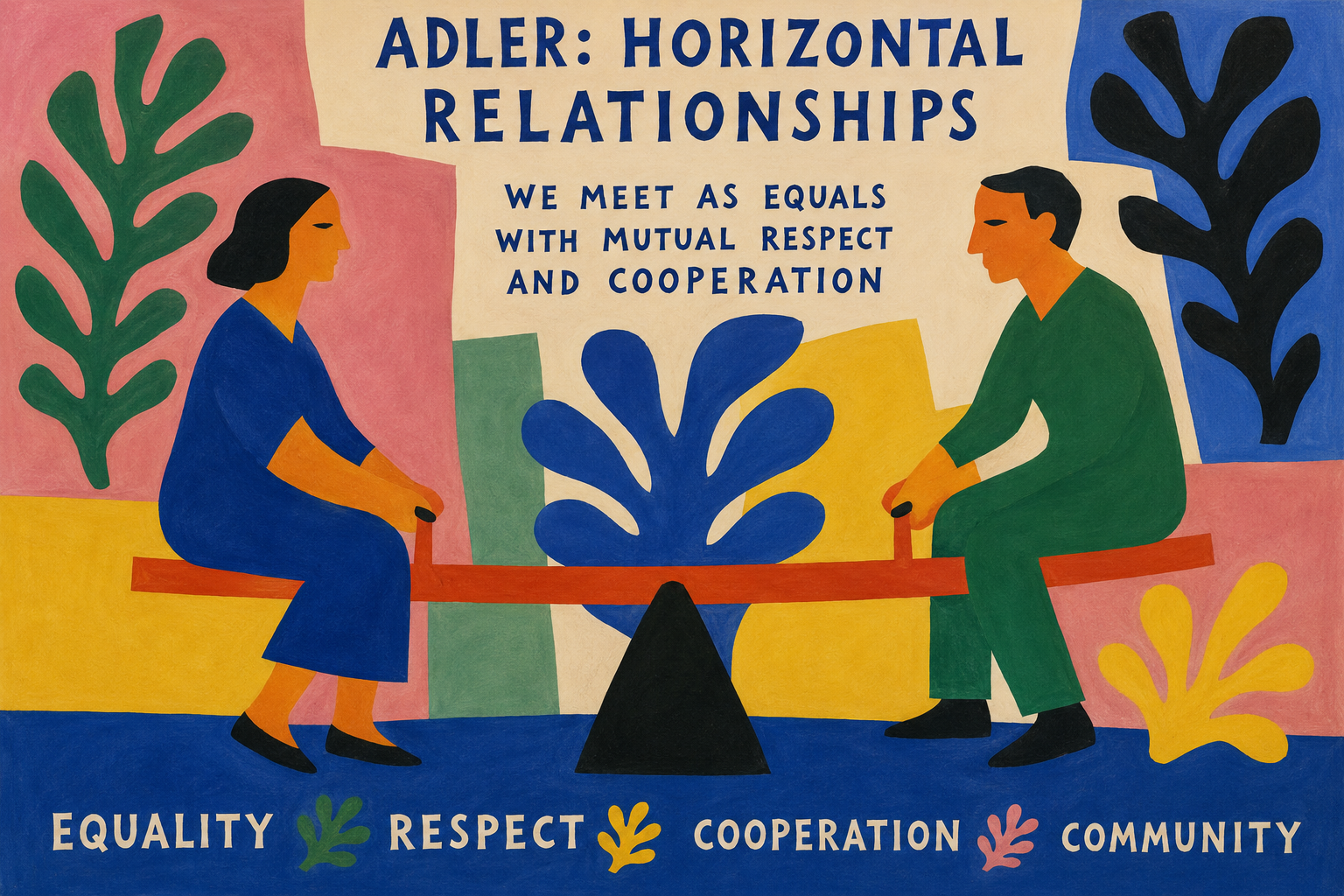
In couples therapy, one theme we often explore is how power dynamics can shape a relationship. Inspired by Terrence Real’s work, many couples struggle when love is expressed from a position of “above” or “below.” Understanding this, alongside Adlerian concepts of vertical and horizontal relationships, can help couples create more balanced, fulfilling partnerships.
What Does It Mean to Love from Above or Below?
Terrence Real describes two common patterns in relationships:
● Loving from above: One partner assumes control, feels superior, or tries to “lead” in a way that diminishes the other’s voice.
● Loving from below: One partner becomes overly accommodating, passive, or submissive, often sacrificing their own needs to maintain harmony.
When love is expressed through either of these positions, it can unintentionally create distance, resentment, or frustration. Both partners may feel unseen or undervalued, even when intentions are good.
Adlerian Psychology: Vertical vs. Horizontal Relationships
Alfred Adler’s framework offers insight into why these patterns emerge.
● Vertical relationships: Hierarchical and unequal, where one partner holds authority and the other defers.
● Horizontal relationships: Egalitarian and balanced, where both partners share responsibility, decision-making, and accountability.
In marriages, vertical patterns can subtly erode connection. One partner may feel burdened by responsibility, while the other feels overshadowed, underappreciated or unheard. Horizontal relationships, in contrast, promote collaboration, respect, and intimacy.
Why Vertical Patterns Can Harm Marriages
Vertical dynamics often develop unconsciously. Past experiences, family upbringing, or social expectations can influence how partners show up. While not inherently “wrong,” these patterns can:
● Reduce emotional safety and trust
● Increase frustration and misunderstandings
● Limit authentic expression of needs and desires
● Make conflict resolution more challenging
● Affect mutual trust and affection when partners create a parent-child like relationship with each other
Recognizing these patterns is the first step toward healthier connection.
Moving Toward Horizontal Love
Terrence Real encourages couples to cultivate “relational competence”: the ability to love as equals while maintaining individual boundaries. Key steps include:
● Awareness: Notice when hierarchical patterns appear in your relationship.
● Open Communication: Discuss dynamics without blame, curiosity over judgment.
● Shared Responsibility: Collaborate on decisions and problem-solving.
● Mutual Respect: Honor both partners’ needs, emotions, and perspectives.
Shifting from vertical to horizontal dynamics allows couples to experience connection as a shared journey rather than a transactional exchange.
Building a Marriage Based on Equality
Couples who embrace horizontal relationships often report deeper empathy, stronger trust, and a renewed sense of partnership. Neither partner feels “above” or “below,” and both are fully seen, heard, and valued.
At Koira Psychology on the Gold Coast, we support couples in exploring these patterns and learning to connect in ways that are respectful, balanced, and emotionally fulfilling. Love thrives when it is mutual, conscious, and shared equally.
Relationships can become unbalanced when one partner relates from a position of superiority (“above”) or submissiveness (“below”), creating emotional distance and frustration.
Terrence Real describes these patterns as unhealthy ways of expressing love that can undermine intimacy and equality.
Alfred Adler distinguished between “vertical relationships” based on hierarchy and “horizontal relationships” based on mutual respect and collaboration.
Vertical relationship dynamics can reduce trust, limit open communication, and create parent-child patterns that make conflict resolution more difficult.
Couples can build healthier, more connected relationships by increasing awareness, communicating
Key Points
Self-Reflection Questions
In our relationship, do I tend to operate from a position of being "above," "below," or alongside my partner as an equal?
Are there situations where one of us consistently takes responsibility, makes decisions, or holds authority while the other defers or withdraws?
How comfortable am I expressing my needs, opinions, and boundaries as an equal partner in the relationship?
What would help us move toward a more collaborative and "horizontal" partnership where both people feel seen, heard, and valued?
-
Add a short summary or a list of helpful resources here.